September 28, 2026 Post by : Editorial Lighting
Plants as Architecture: Using Greenery to Shape a Room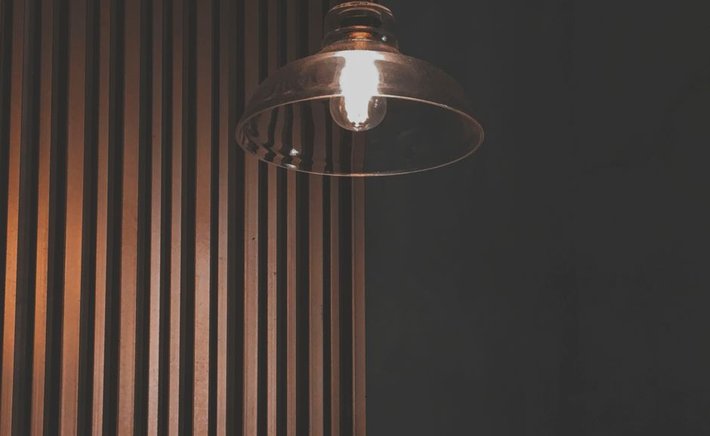
People spend months choosing a sofa and five minutes choosing the light that falls on it. This is backwards. Lighting is the single most powerful tool in a room, and it is also the one most often reduced to a functional afterthought — one bright fixture in the middle of the ceiling, switched on at dusk, doing its best to make everything look slightly worse.
Good lighting is not about brightness. It is about layers. A well-lit room usually has at least three sources at different heights: something overhead, something at eye level, and something low. Each layer does a different job. The overhead light provides general illumination when you need it. The eye-level light — a table lamp, a wall sconce — lights faces and makes conversation possible. The low light, a floor lamp or a candle, warms the floor and creates the sense of a room settling down for the evening.
Colour temperature matters more than most people realise. Bulbs are measured in kelvin, and the difference between 2700K and 4000K is the difference between a room that feels like a home and a room that feels like a waiting area. Warm white, around 2700K, is almost always the right choice for living spaces. Cool white belongs in garages and offices, and nowhere you want to relax. If you have ever walked into a room and felt inexplicably uneasy, check the bulbs. Nine times out of ten they are too cool and too bright.
Dimmers and the Art of Not Using the Full Power
A dimmer switch is the cheapest way to make one light behave like three. Being able to drop the overhead to a third of its output at night changes the entire character of a room. If your ceiling light cannot be dimmed, consider whether you need it on at all in the evening. Many beautiful rooms are lit entirely by lamps after dark, with the overhead off and forgotten.
Shades matter too. An exposed bulb is a glare source, not a light source. A well-chosen shade diffuses the light, spreads it across a wall, and turns a lamp into an object worth looking at. Fabric shades give a soft, even glow; paper and linen are particularly good at this. Metal shades direct light downward in a pool, which is dramatic and useful over a table but unkind as a general light.
Light the Things You Want to See
Think of lighting as a way of directing attention. A picture light over a painting, a small lamp on a bookshelf, a strip of warm light behind a headboard — these do not illuminate the room so much as they illuminate a decision. They tell the eye where to rest. In a room where everything is lit evenly, nothing is important. In a room where light is placed deliberately, the objects it touches become the story.
If you change nothing else in your home this year, change the bulbs, add two lamps, and put the overhead on a dimmer. It costs less than a rug and does more than a repaint. The room will not just look better. It will feel like somewhere you actually want to be.


Author

22 feb,2025
This incident opened my eyes to the value of Insurance in general, so I decided to examine my personal and business insurance.




Comment (3)
The payments are made directly from one person to another without passing through a central bank or clearing house.
22 feb,2025
ReplyRugs That Anchor a Room (and the Mistakes That Undo It)
23 feb,2025
ReplyThe Art of the Gallery Wall Without the Chaos
23 feb,2025
Reply