September 19, 2026 Post by : Editorial Styling & Editing
Kitchens That Feel Lived In: Warmth in the Most Practical Room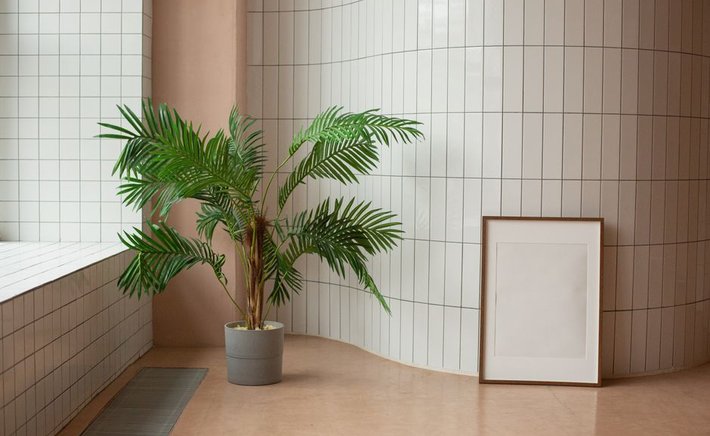
Most people buy a plant, put it in the empty corner, and hope for the best. This is not styling; it is storage. A plant, used with intention, is one of the most powerful tools in a room — it can act as a screen, a focal point, a way of softening hard edges, and a way of bringing a space down to human scale.
Start by thinking about what the room needs rather than what the plant needs. A tall, upright plant like a fiddle-leaf fig or a rubber tree works as a vertical accent, drawing the eye up and adding height where the architecture is flat. A wide, spreading plant like a monstera or a bird of paradise fills a low, empty area and gives weight to a corner that would otherwise feel unfinished. A trailing plant — pothos, string of pearls — softens the top of a bookshelf or the edge of a mantel, breaking the hard line where furniture meets wall.
Scale is where most plant styling goes wrong. A tiny plant on a huge empty floor looks like a mistake. A massive plant in a small room can overwhelm it entirely. Match the plant to the space it is filling: roughly a third of the height of the wall it stands against is a good starting point for a floor plant, and a third of the width of the surface for a tabletop one.
Plants as Room Dividers
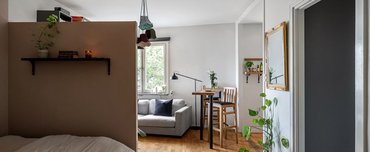
In open-plan spaces, plants can do the work of walls without blocking light. A row of tall plants along the edge of a living area suggests a boundary without actually dividing the room. A single large specimen between a sofa and a dining table creates a visual pause that makes the two zones read as separate. This is particularly useful in rented flats, where you cannot build anything permanent.
Grouping is the other underrated technique. Three plants of different heights on a low bench or a cluster of pots on the floor read as a single composition rather than three separate objects. Group plants by light needs so they thrive together, and vary the pot heights so the group has a shape. A cluster of three identical pots in a row is a shelf; a cluster of three different pots at three different heights is a vignette.
The Pot Is Half the Plant
A beautiful plant in an ugly plastic nursery pot is a missed opportunity. The pot is part of the furniture, and it should be chosen with the same care as a lamp or a vase. Terracotta is warm, cheap, and forgiving, and it suits almost every style of room. Glazed ceramic adds colour and shine. Woven baskets hide the pot entirely and bring texture. Whatever you choose, make sure it is slightly too big rather than slightly too small — a plant that looks like it is bursting out of its pot reads as stressed, not abundant.
Finally, accept that some plants will die. This is not a failure of your taste; it is a fact of indoor gardening. Replace them, move them, try again. A home with plants is a home in progress, and the small daily act of watering something is its own quiet reward.


Author
22 feb,2025
This incident opened my eyes to the value of Insurance in general, so I decided to examine my personal and business insurance.

Comment (3)
The payments are made directly from one person to another without passing through a central bank or clearing house.
22 feb,2025
ReplyThe Art of the Gallery Wall Without the Chaos
23 feb,2025
ReplyKitchens That Feel Lived In: Warmth in the Most Practical Room
23 feb,2025
Reply