September 7, 2026 Post by : Editorial Room by Room
Why Your Lighting Is the Reason the Room Feels Wrong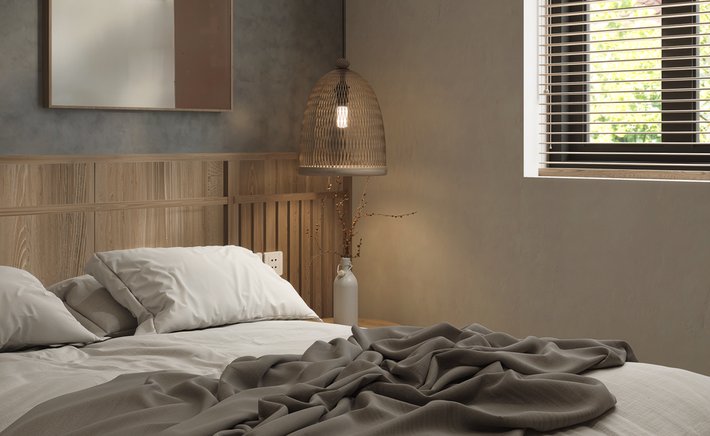
Somewhere along the way, the bedroom became a room for photographs. Perfectly stacked pillows, a styled tray of coffee, a throw arranged at an angle that no human being has ever achieved in real life. None of this has anything to do with sleep, which is the only thing a bedroom is actually for. A room designed for rest looks different from a room designed for a magazine, and it works better.
Start with darkness. The bedroom should be the darkest room in the house at night, and this means curtains that actually block light. Blackout lining is not romantic, but it is the single most effective sleep intervention in most homes, and it can be hidden behind any fabric you like. The same goes for light from electronics. Every small LED in a bedroom — from a charger, a clock, a television — is a tiny signal to your brain that the day is not over. Remove them or cover them.
Temperature matters too. Most people sleep best in a room slightly cooler than the rest of the house, which is why heavy winter duvets are a mistake in a well-heated home. Layers are better than a single thick quilt: a light duvet plus a wool blanket lets you adjust through the night without getting up. Natural fibres — cotton, linen, wool — breathe in a way that polyester does not, and they feel better against the skin.
Calm Colour and the Case Against the Accent Wall
The bedroom is the one room where a muted, tonal palette genuinely earns its keep. Deep blues, soft greens, warm greys, and earthy neutrals all work. What does not work is high contrast — a dark accent wall against white, a bright colour on one side of the room. High contrast keeps the eye alert, which is the opposite of what you want in a room where you are trying to switch off. If you want interest, get it from texture: a linen headboard, a wool rug, a rattan pendant.
Keep the surfaces around the bed clear. A bedside table with a lamp, a book, and a glass of water is enough. Everything else — the phone, the laptop, the pile of unread magazines — belongs somewhere else. The less there is to look at, the easier it is to close your eyes.
Make the Bed the Only Thing That Matters
In a bedroom, the bed is the room. Spend your budget there before anywhere else. A good mattress, a good pillow, and good linen will change your life in a way that no piece of styling ever will. Linen sheets in particular are worth the cost: they are cool in summer, warm in winter, and soften with every wash. A linen duvet cover over a light quilt is the simplest, most comfortable bed you can make.
Finally, resist the urge to fill the room. A bedroom with a bed, two small tables, a lamp, and one piece of art is complete. Everything else is optional, and most of it is noise. Design the room for the version of yourself that is tired and wants to sleep, not the version that is scrolling for inspiration at midnight. The first version is the one who actually lives there.
Author

22 feb,2025
This incident opened my eyes to the value of Insurance in general, so I decided to examine my personal and business insurance.





Comment (3)
The payments are made directly from one person to another without passing through a central bank or clearing house.
22 feb,2025
ReplySmall Rooms, Big Ideas: Making Compact Spaces Feel Generous
23 feb,2025
ReplyWhy Your Lighting Is the Reason the Room Feels Wrong
23 feb,2025
Reply